
CASE STUDY 5
high end hair editorial | from wig to real hair
This image has been kindly provided by beauty and fashion photographer Armin Morbach and TUSH magazine.
where photography ends, our craft begins.
final image
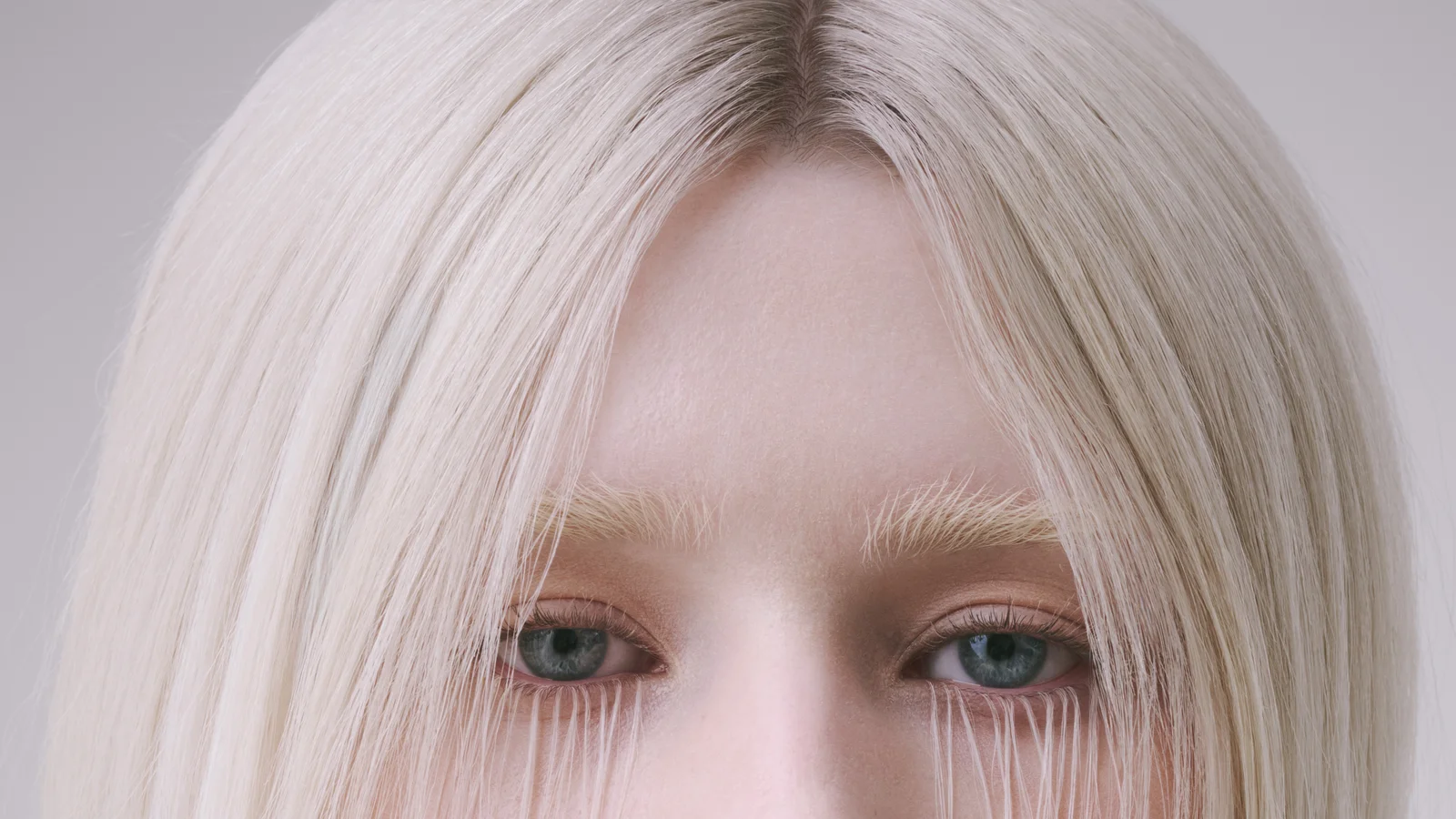
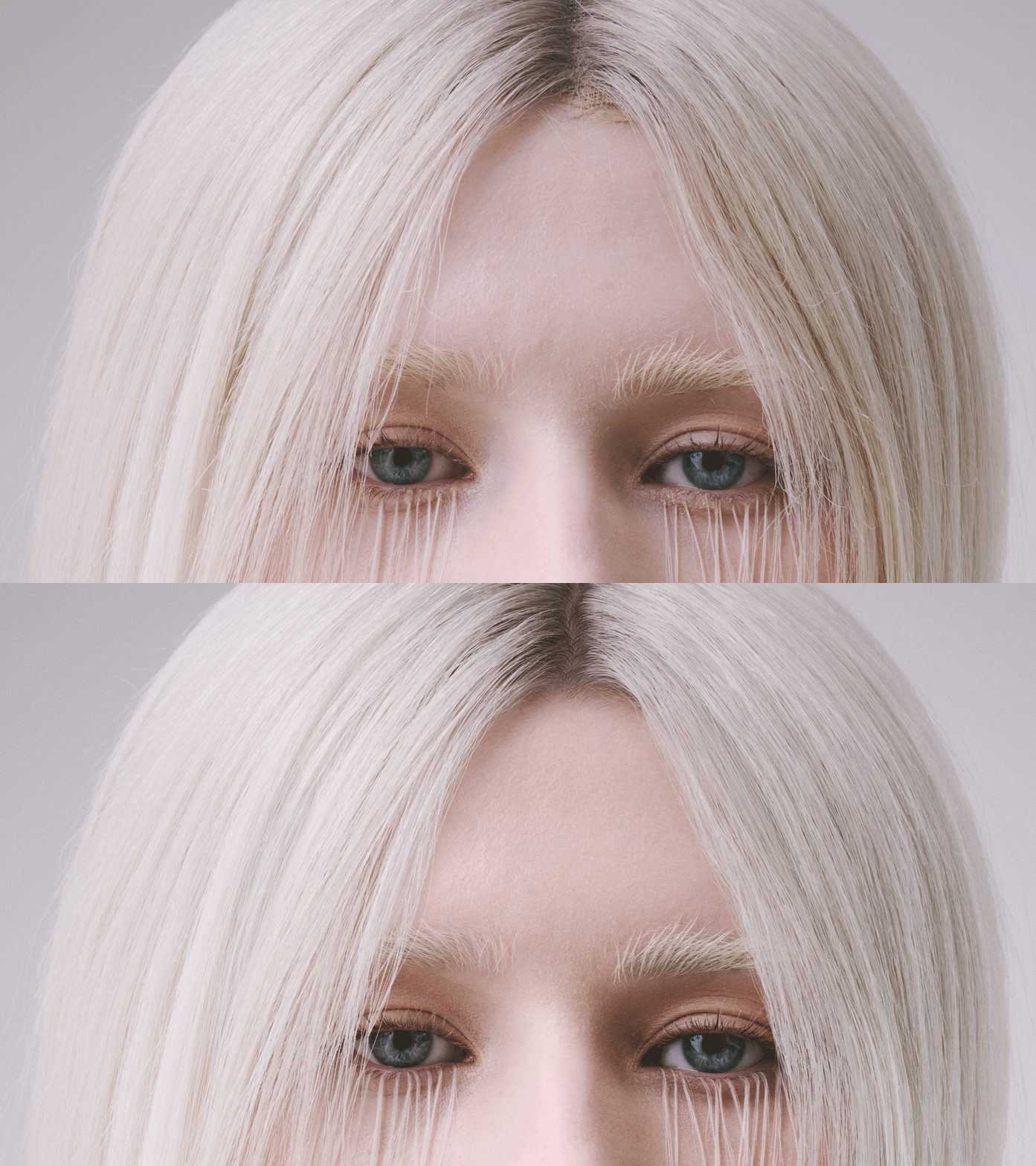
before / after
general idea / briefing
For this beauty close-up for TUSH magazine, the model wore a platinum blonde wig. On set it created exactly the graphic look Armin was after. In a tight crop at full resolution, however, a wig gives itself away: the lace net at the parting is visible, the hair looks dry, and the strands fall too evenly in some areas and too wild in others.
The brief was clear: the hair has to read as real hair growing from the scalp, even at 200%, without losing the clean, calm character of the image.
As always, the work starts with a neutral raw conversion in Capture One. It keeps every tonal range in balance and gives me a flexible base for a completely non-destructive retouch in Photoshop.
markup & notes
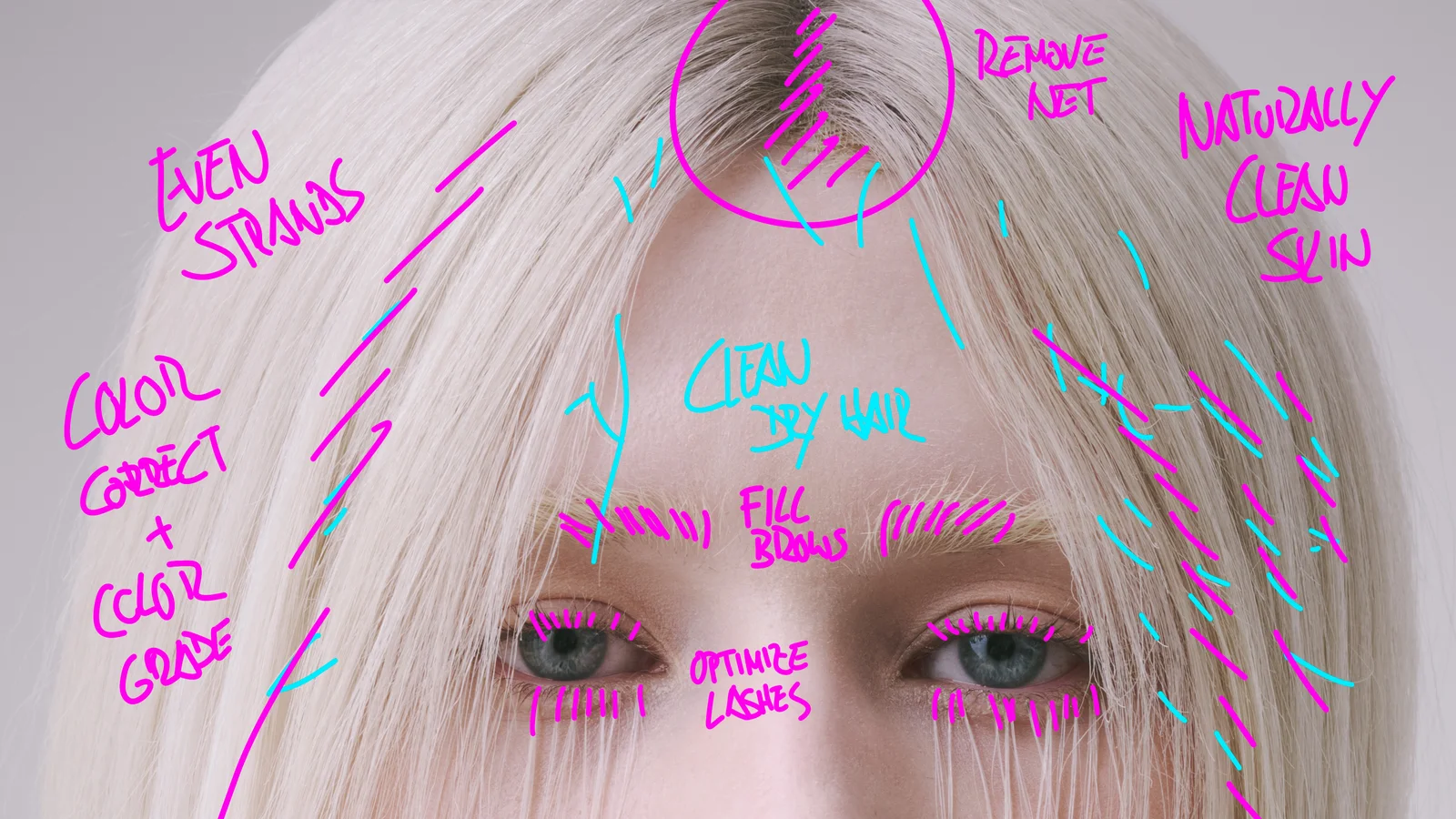
As you can see in the markup and visual notes, the plan covers the whole face, not only the parting. Magenta marks the structural work: removing the net, evening out the strands, filling the brows and optimizing the lashes. Cyan marks the clean-up of dry hair and flyaways across the forehead and along the outline. On top of that come naturally clean skin and a final color correction and grade.
first step - cleaning up hair, skin, brows and lashes
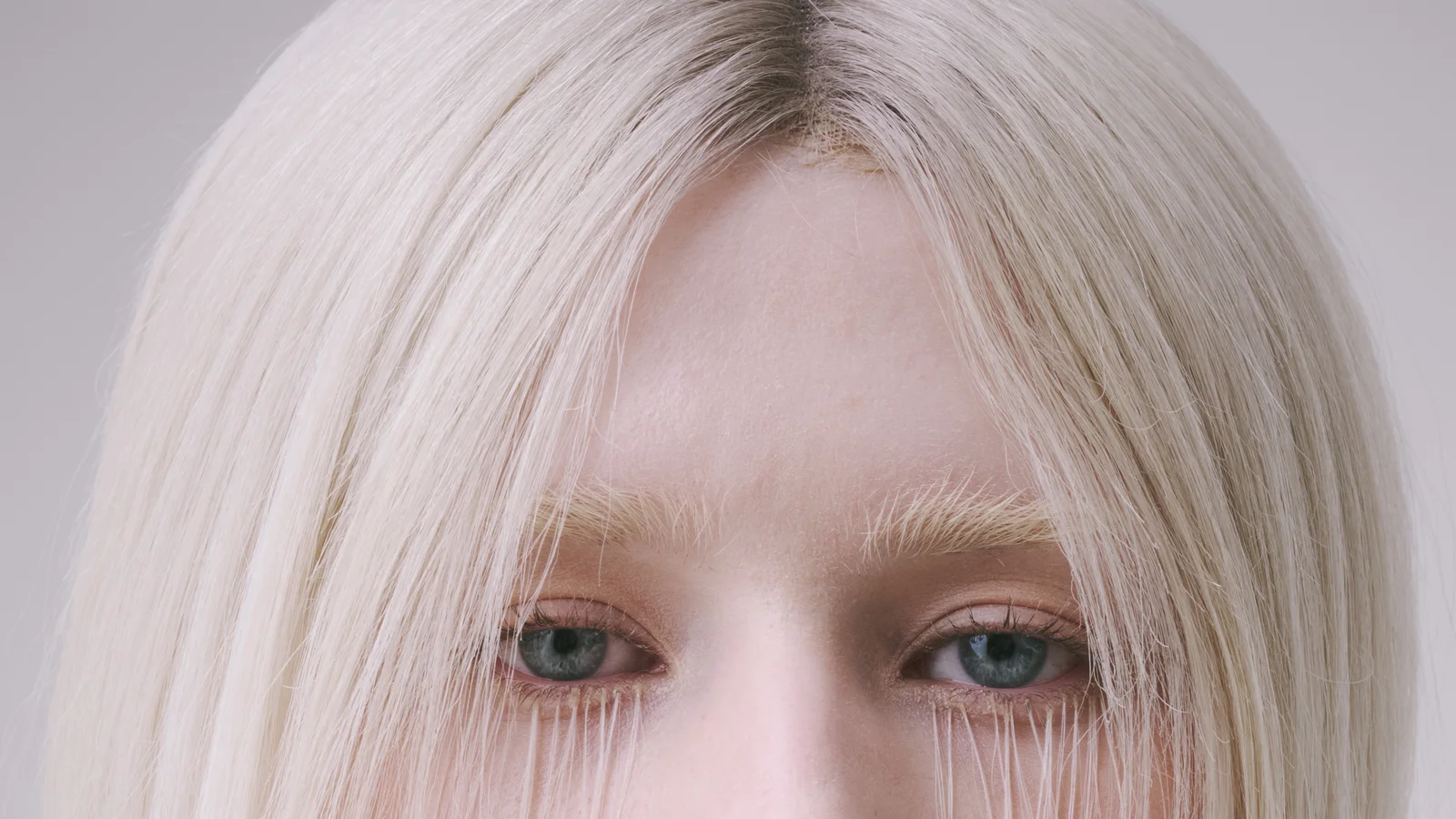
I start with everything that distracts from the hair itself. Dry hairs and flyaways crossing the forehead are removed or calmed, so the eye reads clean lines. The skin is retouched in a very natural way, only taking out temporary imperfections while keeping its texture.
The brows are filled with fine single hairs that follow the natural growth direction, and the lashes are optimized to frame the eyes. At this stage the lace net is still visible on purpose: it is the most delicate part of the job and comes next.
second step - removing the net and rebuilding the hairline
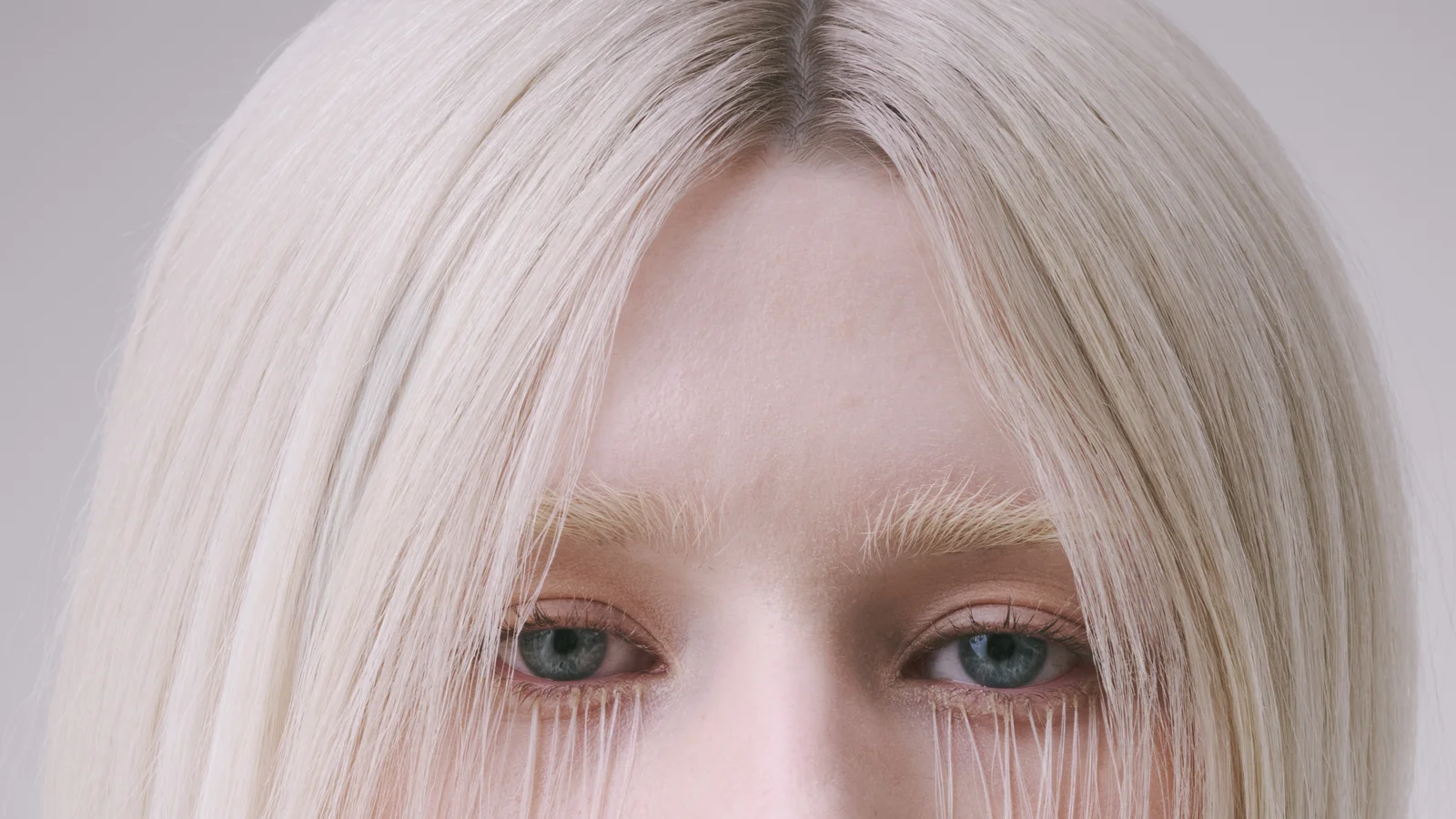
This is where a wig becomes real hair. The lace net at the parting is removed completely. Where it covered the scalp, I rebuild the parting with skin texture and fine baby hairs, and paint new strands that grow out of the scalp instead of sitting on top of it.
The root shadow is kept and blended softly into the platinum lengths, which makes the color believable. Finally, the strands on both sides are evened out, so the hair falls naturally and no single strand pulls focus.
third step - color correction, color grade and grain
To finish, skin, hair and background are brought into one harmony. The color correction removes slight casts in the platinum hair and keeps the skin fresh and natural, and a subtle color grade gives the image its calm, cool mood.
As in all my work, a very subtle grain layer extracted from original analogue film ties everything together, so retouched and original areas share the same texture. The final image can now be delivered to the photographer and the magazine.
a similar project in mind?
Let's talk: mail@janwischermann.de